
SEO for Beginners: 7 Essential Steps to Rank in 2026
This comprehensive guide breaks down SEO basics for beginners into actionable, priority-based steps that align with Google’s current ranking factors. Whether you’re a small business owner, freelancer, or marketing professional, you’ll learn exactly what to focus on first to see measurable results without wasting resources on outdated tactics.
Understanding Modern SEO: What Beginners Need to Know
Search engine optimization in 2026 looks dramatically different from just a few years ago. Google’s AI-powered Search Generative Experience (SGE) and continuous algorithm refinements have fundamentally changed how websites rank.
What Makes SEO Different Today?
Modern SEO prioritizes user experience above all else. Google’s algorithms now evaluate websites based on E-E-A-T principles (Experience, Expertise, Authoritativeness, and Trustworthiness), ensuring content genuinely helps searchers rather than manipulates rankings.
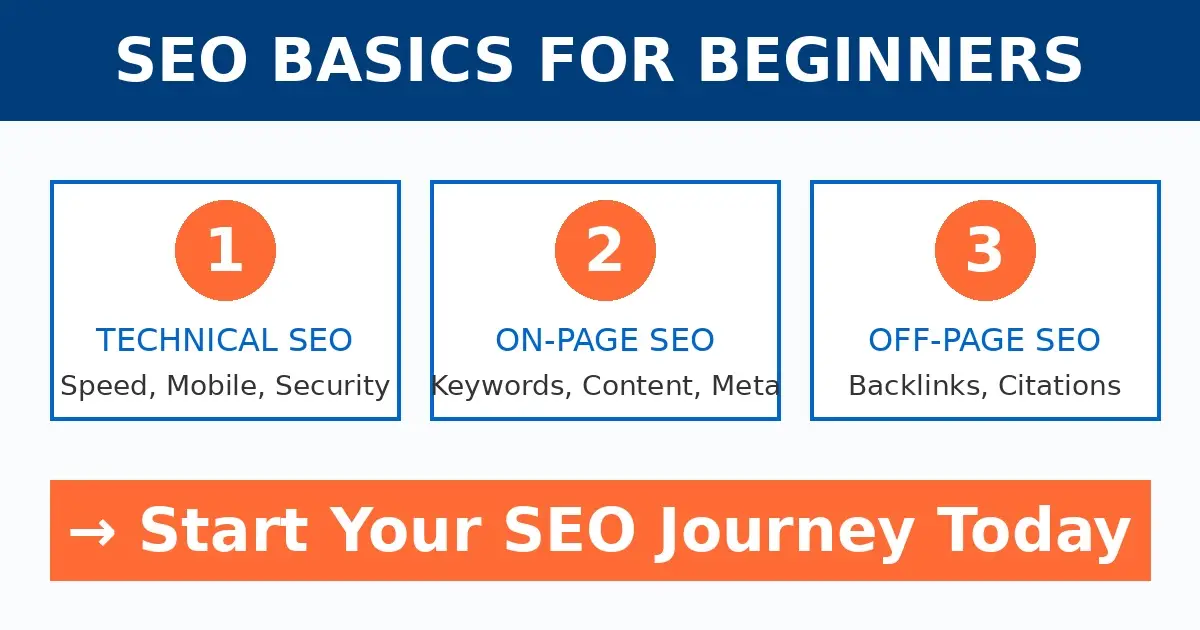
The three pillars of contemporary SEO basics for beginners include:
Content Quality and Relevance: Your content must demonstrate real experience and provide genuine value. Google’s Helpful Content System actively demotes content created solely for ranking purposes.
Technical Performance: Core Web Vitals, measuring page speed, interactivity, and visual stabilit,y directly impact rankings. Mobile-first indexing means your site must perform flawlessly on smartphones.
Authority Building: Earning high-quality backlinks from reputable sources signals trustworthiness to search engines and drives referral traffic.
What Beginners Should Focus on First for SEO Success
The biggest mistake beginners make is trying to do everything simultaneously. Success comes from mastering fundamentals before advancing to complex strategies.
1. Keyword Research and Search Intent
Before creating any content, understand what your audience searches for and why. Keyword research forms the foundation of every successful SEO campaign.
Focus on these keyword types first:
- Long-tail keywords (3-5 words) with clear commercial intent
- Question-based queries your target customers ask
- Location-specific terms if you serve local markets
- Keywords with manageable competition levels for new sites
Use tools like Google Keyword Planner, Google Search Console, or free alternatives to identify opportunities. Prioritize search intent—the reason behind someone’s query—over search volume alone.
Explore Our Keyword Research Services
2. Create Helpful, Experience-Driven Content
Content remains the most critical ranking factor for SEO for beginners. However, generic, AI-generated fluff won’t cut it anymore.
Your content must demonstrate first-hand experience and unique insights. Google’s algorithms can detect and reward content that shows genuine expertise through:
- Specific examples from real projects or experiences
- Original research, data, or case studies
- Practical advice readers can implement immediately
- Clear author credentials and expertise signals
Aim for comprehensive coverage that fully satisfies search intent. Articles should typically exceed 1,500 words for competitive topics while remaining scannable with clear headings, short paragraphs, and visual elements.
3. Master On-Page SEO Fundamentals
On-page optimization ensures Google understands your content’s topic and relevance. Beginners should prioritize these elements:
Title Tags: Include your focus keyword naturally within 60 characters. Make it compelling to drive clicks from search results.
Meta Descriptions: Write unique 150-160 character descriptions that include your keyword and encourage clicks.
Header Structure: Use H1 for your main title, H2s for major sections, and H3s for subsections. Include your focus keyword in at least one H2 heading naturally.
URL Structure: Keep URLs short, descriptive, and keyword-rich. Avoid unnecessary parameters or dates.
Image Optimization: Compress images for fast loading, use descriptive filenames, and write specific alt text incorporating keywords naturally.

Google Search Central’s SEO Starter Guide
4. Prioritize Technical SEO Basics
Technical SEO ensures search engines can crawl, index, and rank your site effectively. Start with these non-negotiables:
Mobile Responsiveness: Over 60% of searches happen on mobile devices. Your site must adapt perfectly to all screen sizes.
Page Speed: Target loading times under 2.5 seconds. Use Google PageSpeed Insights to identify improvement opportunities.
SSL Certificate: HTTPS is a confirmed ranking factor and builds user trust. All sites must have valid SSL certificates.
XML Sitemap: Submit a sitemap to Google Search Console to help search engines discover all your pages.
Robots.txt File: Properly configure this file to guide search engine crawlers and prevent indexing of duplicate or low-value pages.
These technical foundations might seem intimidating, but most modern content management systems handle them automatically with proper configuration.
Step-by-Step SEO Process for Beginners
Follow this proven roadmap to build your SEO foundation systematically:
Step 1: Set Up Google Search Console and Analytics
These free tools provide essential data about your site’s performance, search queries driving traffic, and technical issues requiring attention. Verify your site ownership and submit your sitemap within the first week.
Step 2: Conduct Competitor Analysis
Identify 3-5 competitors ranking for your target keywords. Analyze their content depth, backlink profiles, and site structure to understand what’s working in your niche.
Step 3: Create Your Keyword Strategy
Build a list of 20-30 target keywords organized by priority and search intent. Group related keywords to target in comprehensive content pieces rather than creating separate pages for every variation.
Step 4: Develop Content Calendar
Plan content production around your keyword strategy. Aim for consistent publishing—one comprehensive article weekly beats sporadic bursts of thin content.
Step 5: Optimize Existing Pages
Before creating new content, optimize what you already have. Update old posts with fresh information, improve on-page elements, and enhance readability.
Step 6: Build Quality Backlinks
Start with easy wins: business directories, industry associations, and local chambers of commerce. Create shareable content that naturally attracts links from authoritative sources.
Step 7: Monitor and Adjust
SEO requires ongoing refinement. Review Search Console data monthly to identify ranking improvements, click-through rate opportunities, and technical issues.

Common SEO Mistakes Beginners Make
Avoiding these pitfalls saves months of wasted effort and potential penalties:
Keyword Stuffing: Repeating keywords unnaturally damages readability and triggers Google’s spam filters. Maintain natural keyword density around 1% and focus on synonyms and related terms.
Ignoring Search Intent: Ranking for high-volume keywords means nothing if they don’t match what you offer. A beginner searching “SEO for beginners” wants educational content, not sales pitches.
Neglecting Mobile Optimization: With mobile-first indexing, a poor mobile experience kills your rankings regardless of desktop performance.
Buying Links: Purchased backlinks violate Google’s guidelines and can result in manual penalties. Focus on earning links through quality content and genuine relationships.
Expecting Immediate Results: SEO is a long-term strategy. Most sites need 3-6 months to see significant ranking improvements for competitive keywords.
Duplicating Content: Copying content from other sites or duplicating your own pages across multiple URLs confuses search engines and wastes crawl budget.
Overlooking Local SEO: If you serve specific geographic areas, ignoring Google Business Profile optimization and local citations means missing highly qualified leads.
Benefits of Implementing SEO Correctly
When executed properly, SEO success tips deliver measurable business growth:
Sustainable Organic Traffic: Unlike paid advertising that stops when budgets run out, organic rankings provide consistent traffic month after month. Well-optimized content can drive leads for years.
Higher Conversion Rates: Organic search visitors convert at nearly 15% compared to just 2% for outbound marketing tactics. People actively searching for solutions are primed to take action.
Improved Brand Credibility: Ranking on Google’s first page signals authority and trustworthiness. Consumers trust organic results more than advertisements.
Cost-Effective Marketing: While SEO requires time and expertise, the long-term cost per acquisition is significantly lower than pay-per-click advertising.
Competitive Advantage: Strong SEO positions you ahead of competitors in your industry. Once established, rankings create barriers to entry for new competitors.
Better User Experience: SEO best practices—fast loading, mobile optimization, clear navigation—improve user satisfaction and reduce bounce rates.
Measurable ROI: Modern analytics tools provide clear visibility into which keywords drive conversions, allowing continuous optimization of your strategy.
Why Choose Professional SEO Services
While basic SEO for beginners is learnable, professional expertise accelerates results and avoids costly mistakes.
Our Experience Delivers Results
With years of proven success helping businesses achieve first-page rankings, our team stays current with every algorithm update and ranking factor change. We’ve helped clients across industries increase organic traffic by an average of 250% within the first year.
Comprehensive SEO Strategy
We handle every aspect of SEO so you can focus on running your business:
- In-depth keyword research and competitor analysis
- Content strategy and creation demonstrating E-E-A-T principles
- Technical SEO audits and implementation
- White-hat link building and digital PR
- Ongoing monitoring and optimization
- Transparent reporting and regular strategy sessions
Compliance and Ethical Practices
We strictly follow Google’s Webmaster Guidelines and never use manipulative tactics that risk penalties. Our strategies focus on sustainable, long-term growth rather than short-term gains.
Localized Expertise
Whether you serve customers locally or globally, we optimize for your specific market. Our local SEO strategies include Google Business Profile optimization, local citation building, and location-specific content creation.
Proven ROI
Our clients see average return on investment of 5:1 within the first year. We track every metric that matters—rankings, traffic, leads, and conversions—to demonstrate clear business value.
Ready to dominate search results? Request your free SEO audit and strategy session today.
Frequently Asked Questions About SEO for Beginners
What is SEO and why does it matter?
SEO (Search Engine Optimization) is the practice of improving your website to increase visibility in search engine results. It matters because 68% of online experiences begin with a search engine, and 75% of users never scroll past the first page of results.
How long does SEO take to show results?
Most websites see initial improvements within 3-4 months, with significant results appearing in 6-12 months for competitive keywords. SEO is a long-term investment, not a quick fix.
Can I do SEO myself or should I hire an expert?
Basic SEO is learnable, but professional expertise saves time and prevents costly mistakes. If you have limited time or compete in a competitive industry, professional services typically deliver better ROI.
What’s the most important SEO factor for beginners?
Content quality is paramount. Google’s algorithms prioritize helpful, experience-driven content that genuinely answers searcher questions. Master content creation before worrying about advanced tactics.
How much should I budget for SEO?
Professional SEO services typically range from $750-$5,000+ monthly depending on competition level and scope. DIY SEO requires time investment but minimal financial costs beyond tools.
Is SEO still relevant with AI search features?
Absolutely. AI-powered search features like Google’s SGE still rely on the same ranking signals. Quality content demonstrating expertise becomes even more critical as AI curates results.
What’s the difference between on-page and off-page SEO?
On-page SEO involves optimizing elements on your website (content, title tags, site speed). Off-page SEO focuses on external factors like backlinks and brand mentions.
How often should I update my SEO strategy?
Review performance monthly and adjust tactics based on data. Conduct comprehensive strategy reviews quarterly to stay aligned with algorithm updates and industry changes.
Real-World SEO Success Examples
Local Service Business: A plumbing company implementing SEO basics for beginners saw 340% increase in organic leads within 8 months by focusing on local keywords, Google Business Profile optimization, and helpful how-to content demonstrating their expertise.
E-commerce Store: An online retailer struggling with visibility targeted long-tail product keywords and created comprehensive buying guides. Results included 200% traffic increase and 85% boost in organic revenue within one year.
B2B Consulting Firm: By publishing experience-driven case studies and thought leadership content, a consulting firm established topical authority and increased qualified leads by 150% while reducing cost per acquisition by 60%.

These examples demonstrate that SEO success tips work across industries when implemented consistently with focus on user value.
Take the First Step Toward SEO Success
Mastering SEO for beginners doesn’t require technical genius or massive budgets. It requires focus on fundamentals, commitment to quality, and patience for results to compound.
Start with these priorities: understand your audience’s search intent, create genuinely helpful content, optimize on-page elements, and build technical foundations. Avoid shortcuts and manipulative tactics that promise quick wins but deliver long-term problems.
Whether you choose to learn SEO yourself or partner with experienced professionals, the most important step is starting today. Every day you delay is another day your competitors capture the organic traffic and customers you’re missing.
Ready to transform your online visibility? Contact us for a comprehensive SEO audit and customized strategy designed for your business goals. Get your free consultation now and discover exactly what your site needs to rank.